NuSTARs Payload
Overview
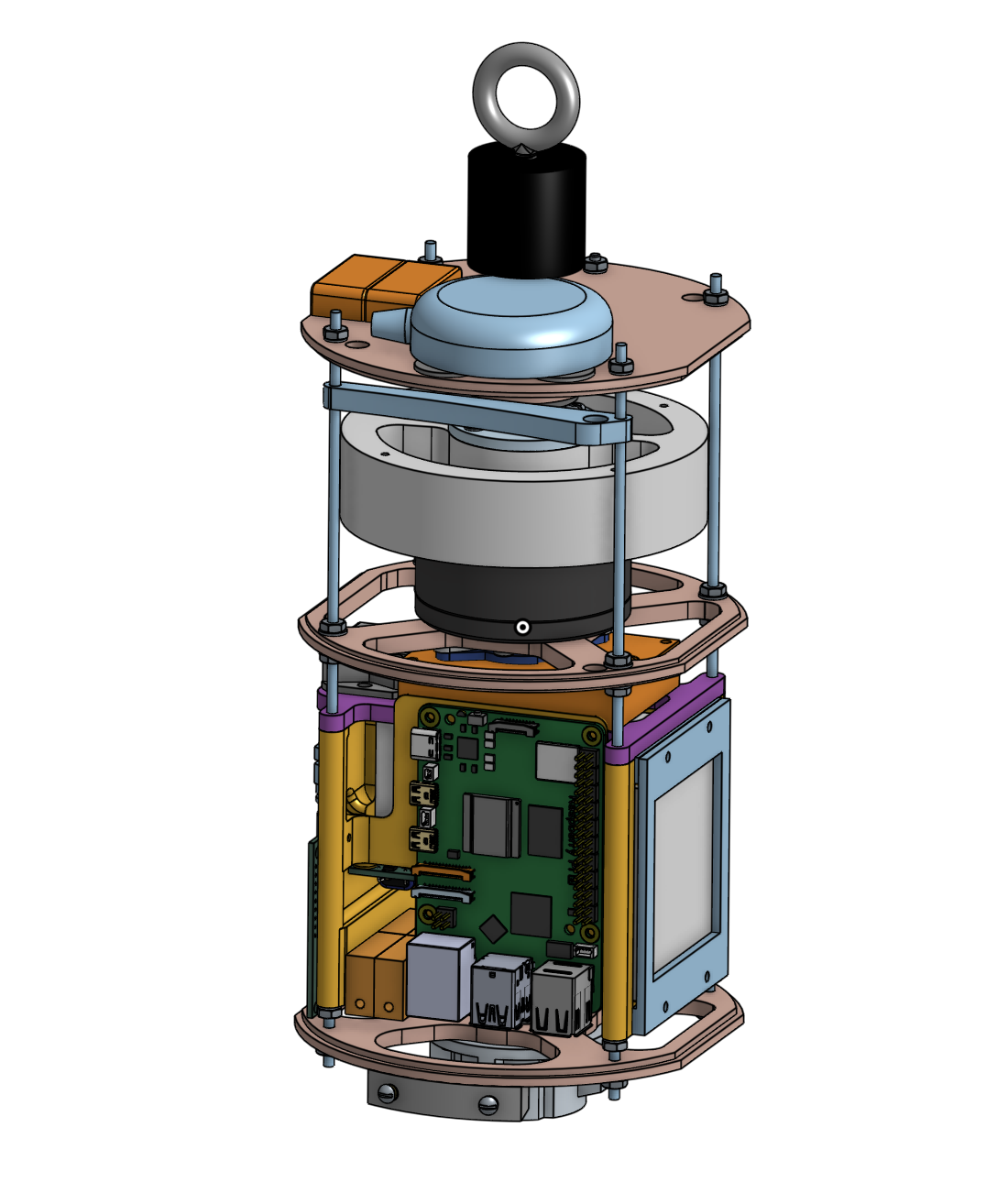
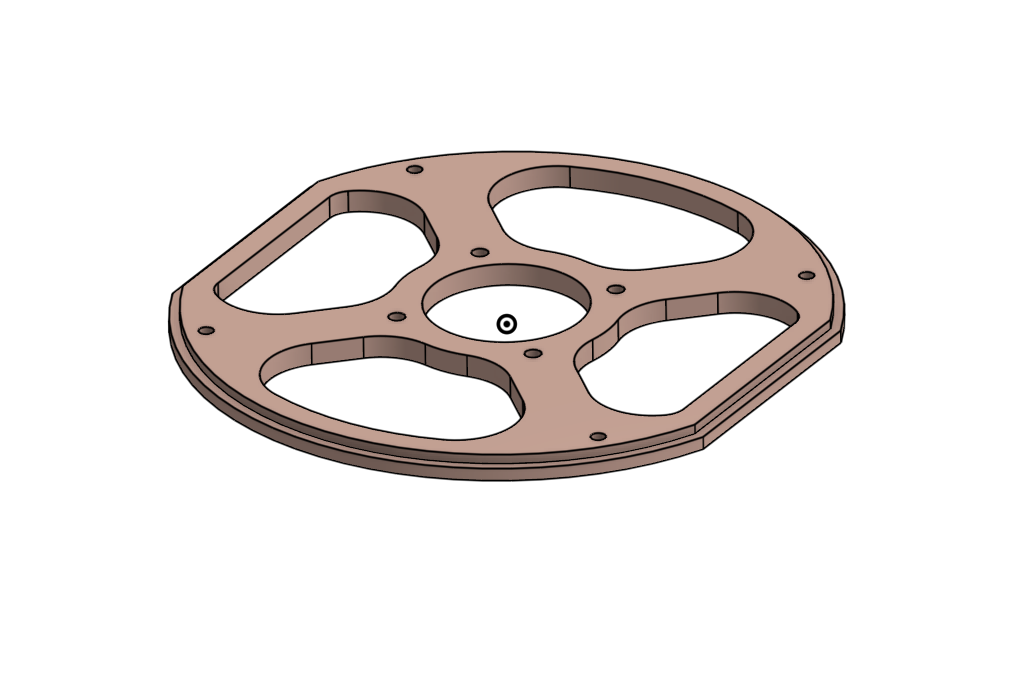
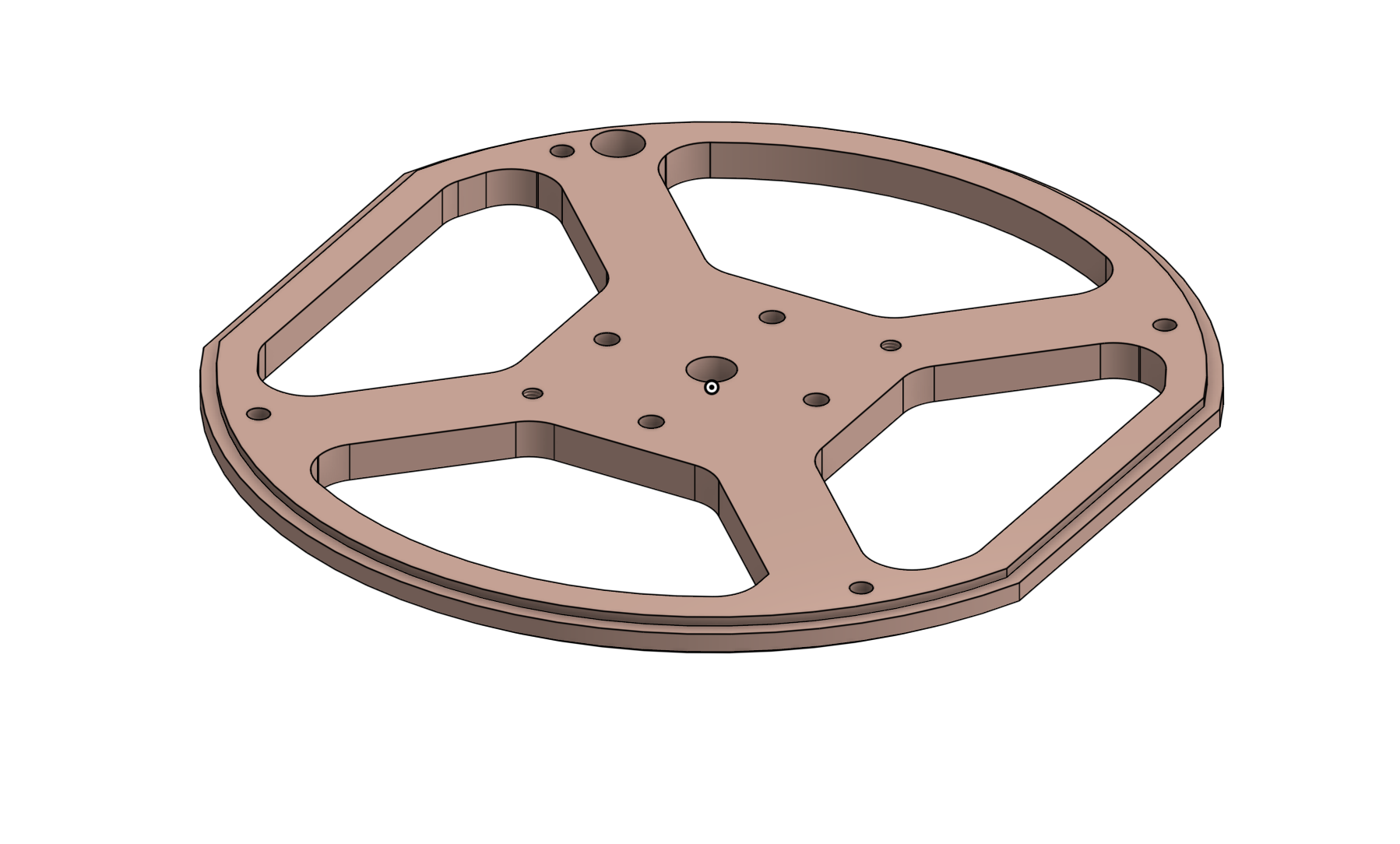
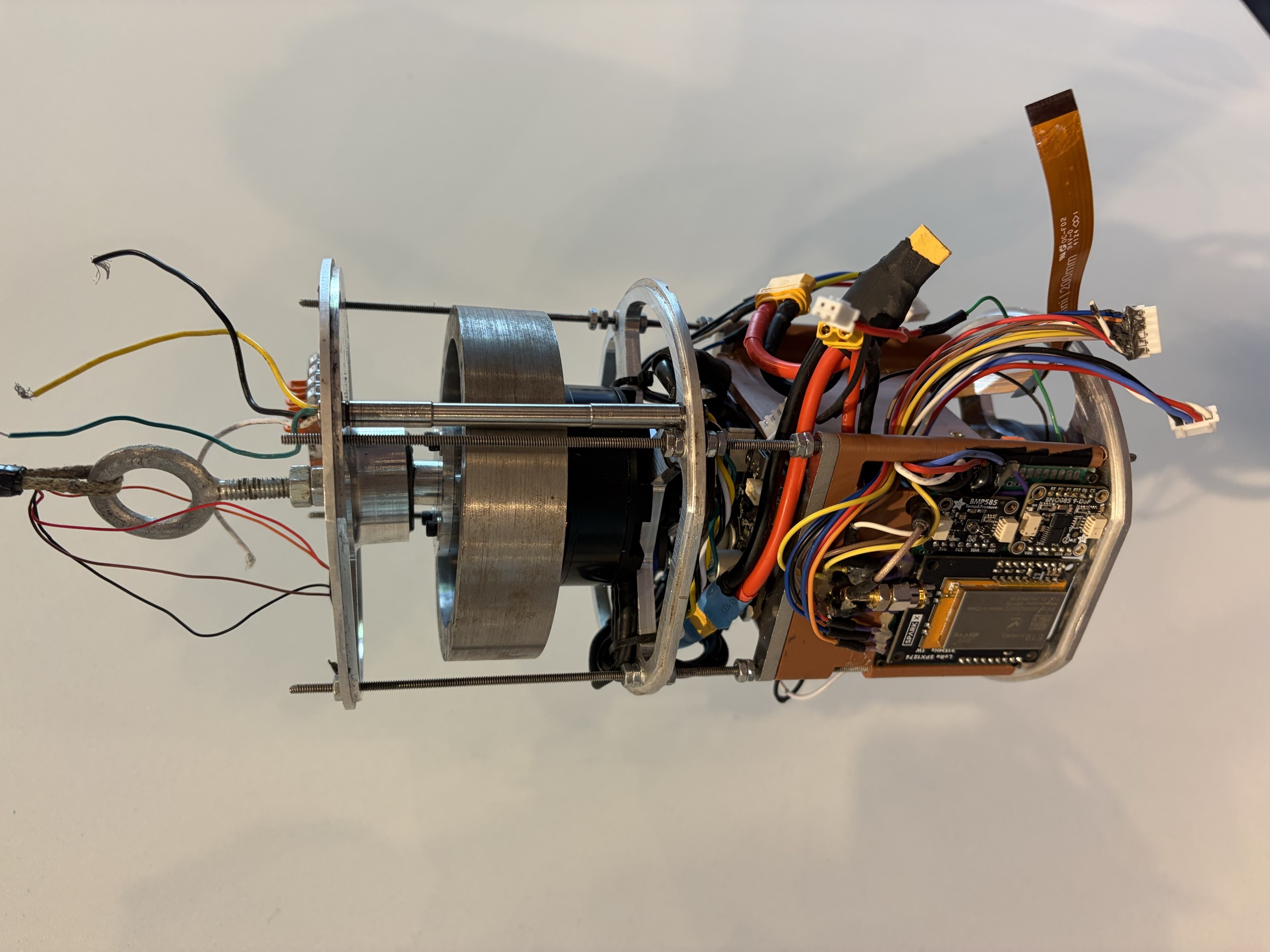
I worked on the mechanical design and manufacturing of the NuSTARs Atlas payload. My work centered on the aft and mid bulkheads and on an early raceway sled for wiring between the flight computer, avionics, and antenna puck. The temporary sled connected to a small hollow aluminum tube and kept the harness constrained away from the reaction wheel during test launches. As the payload matured, our team realized the sled was unnecessary: the thicker routing tube could run straight upward beside the slimmer structural rods to the antenna puck, which is the configuration visible in the integrated hardware photo.
I created the CAM for the aft and mid bulkheads and CNC-machined the parts. I also designed the temporary raceway sled used during test launches. After testing and reviewing the physical assembly, the team determined that the sled could be removed and the aluminum tube could route directly to the antenna puck.
Skills: CAM/CNC · Mechanical Design · Cable Routing
Goals
I needed to manufacture the payload bulkheads and protect the avionics-to-antenna wiring near the spinning reaction wheel while the flight-hardware layout was still evolving.
- The aft and mid bulkheads to preserve the Atlas assembly interfaces and machining features.
- CAM operations that could produce the bulkhead geometry on the CNC machine.
- A protected wiring route for early test launches.
- The final route to keep the harness clear of the reaction wheel with as few extra parts as possible.
Design
Reviewed the Atlas assembly to identify the bulkhead interfaces, fastener locations, clearances, and reaction-wheel envelope.
Prepared the bulkhead CAM operations and translated the CAD geometry into CNC machining steps.
Machined the bulkheads and checked that the finished geometry matched the intended assembly interfaces.
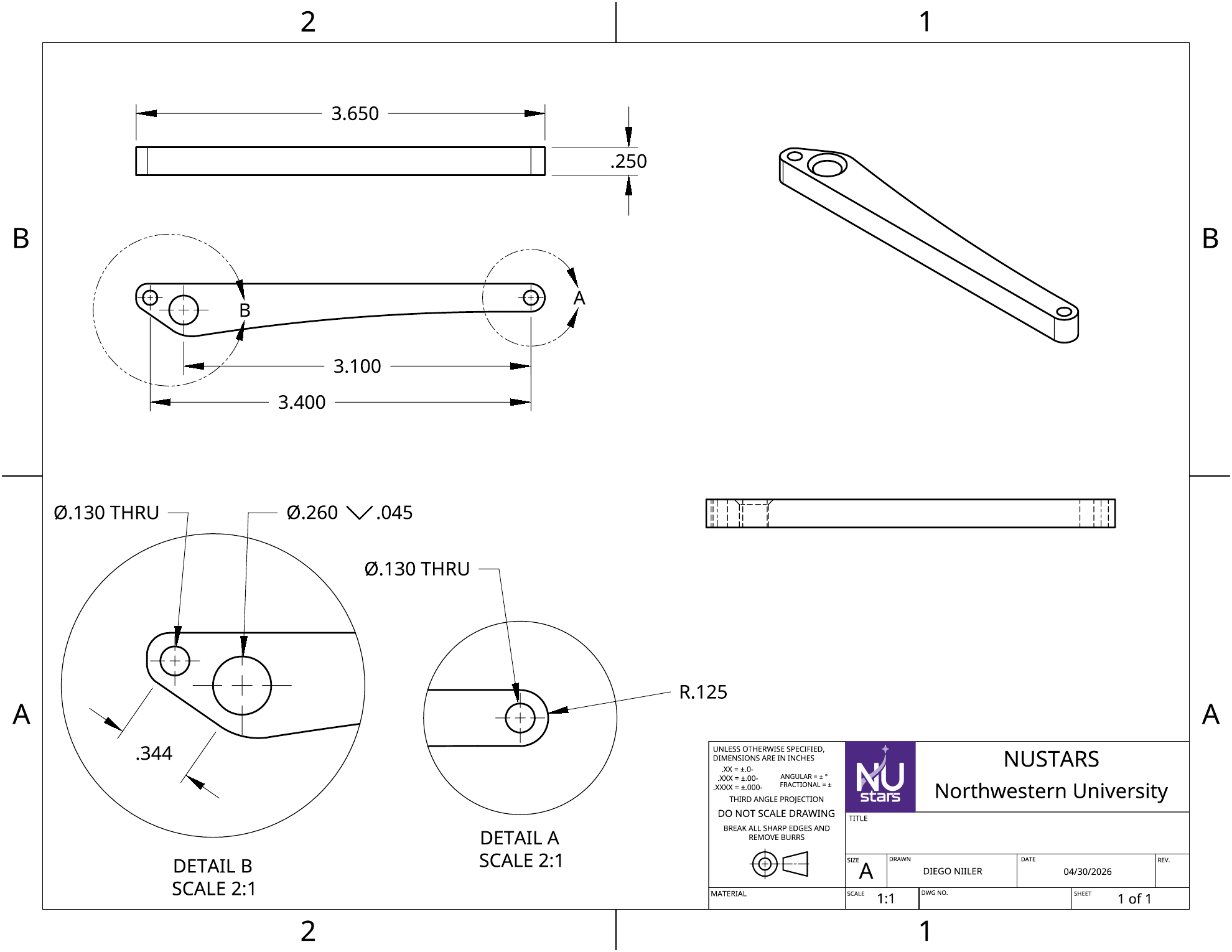
Designed the temporary raceway sled around the wire bundle and hollow aluminum guide tube so the harness stayed clear of the reaction wheel during test launches.
After evaluating the assembled payload, the team eliminated the temporary sled and routed the thicker tube directly upward to the antenna puck beside the slimmer support rods.
Outcomes
I completed the CAM work and CNC-machined the payload bulkheads, translating the CAD geometry into manufactured parts for the Atlas assembly. The temporary raceway sled provided a protected wiring path during earlier test launches, but it did not carry into the final configuration. The team simplified the design by eliminating the extra part and routing the aluminum tube directly to the antenna puck ahead of the final IREC launch campaign.
- Completed the CAM and CNC manufacturing workflow for the aft and mid payload bulkheads.
- Used the temporary raceway sled to protect wiring during test launches, then simplified the final configuration by removing the sled and routing the tube directly to the antenna puck.
I learned that a useful prototype does not have to remain in the final design. The raceway sled reduced wiring risk during test launches and helped us understand the routing problem, but the better final solution was to remove the part and send the tube directly to the antenna puck. That iteration reinforced the value of simplifying an assembly once the physical interfaces are understood. My next step would be to document the final tube clearances and verify the harness under full-speed reaction-wheel operation.