MagClean
Overview
I worked on a four-person team to address a common problem in Northwestern classrooms: whiteboards that reach nearly nine feet high are slow and physically awkward to clean with a standard eraser. We treated the project as a complete product-development cycle. I helped research existing solutions, organize our schedule, compare concepts, build prototypes, and test the final design on a full-size classroom board.
I led the team's work plan, deadlines, and calendar. I also produced the final prototype sketch, fabricated components in the shop, ran user testing, researched existing solutions, presented our progress, and wrote the conclusion of the final report.
Skills: Prototyping · User Testing · Product Design
Goals
My team and I set out to develop a manual, affordable cleaner for large classroom whiteboards that would reduce cleaning time, ghosting, reach limitations, and physical effort without adding motors or electronics.
- Reach the top of nearly 9 ft classroom boards without a stool.
- Clean large areas with consistent pressure and fewer passes.
- Wanted one tool to support both dry and wet cleaning.
- The design to remain intuitive, maintainable, non-electric, and safe for the board surface.
- Keep the prototype below our $150 budget.
Design
During Weeks 1–2, I helped research users, competing products, and the physical constraints of Northwestern classrooms.
During Weeks 3–4, my team and I generated alternatives and compared them against reach, pressure, complexity, and cleaning performance.
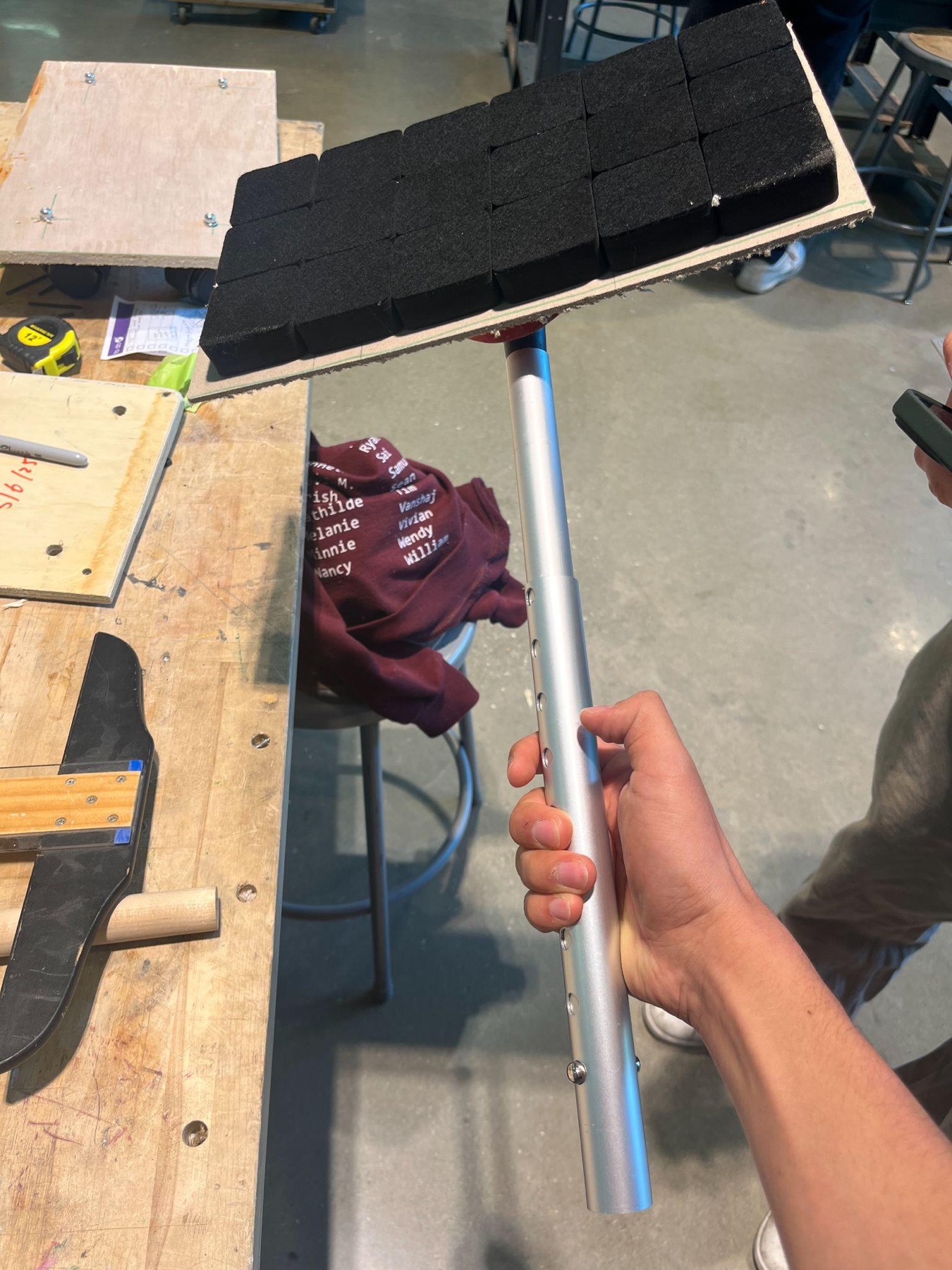
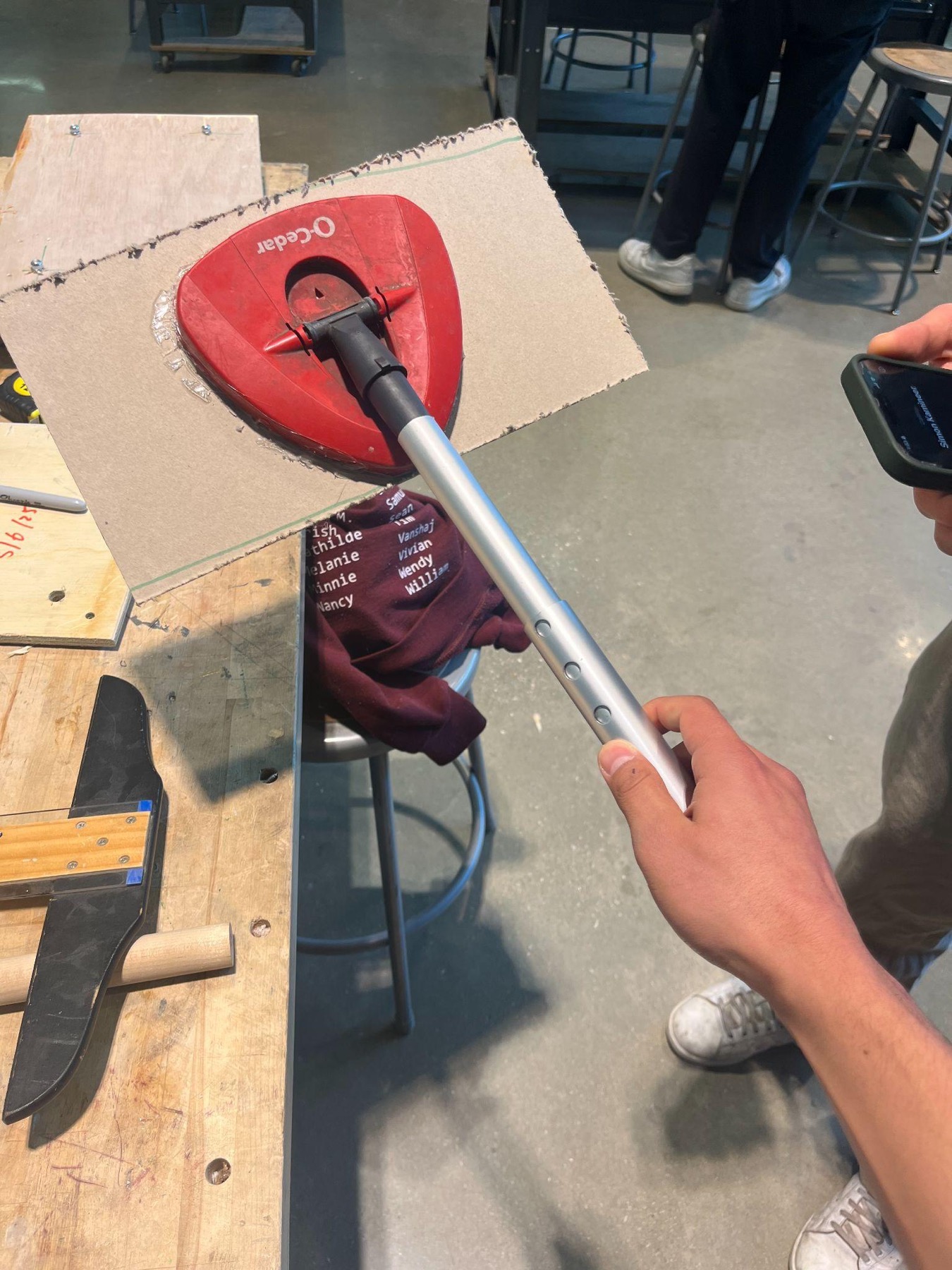
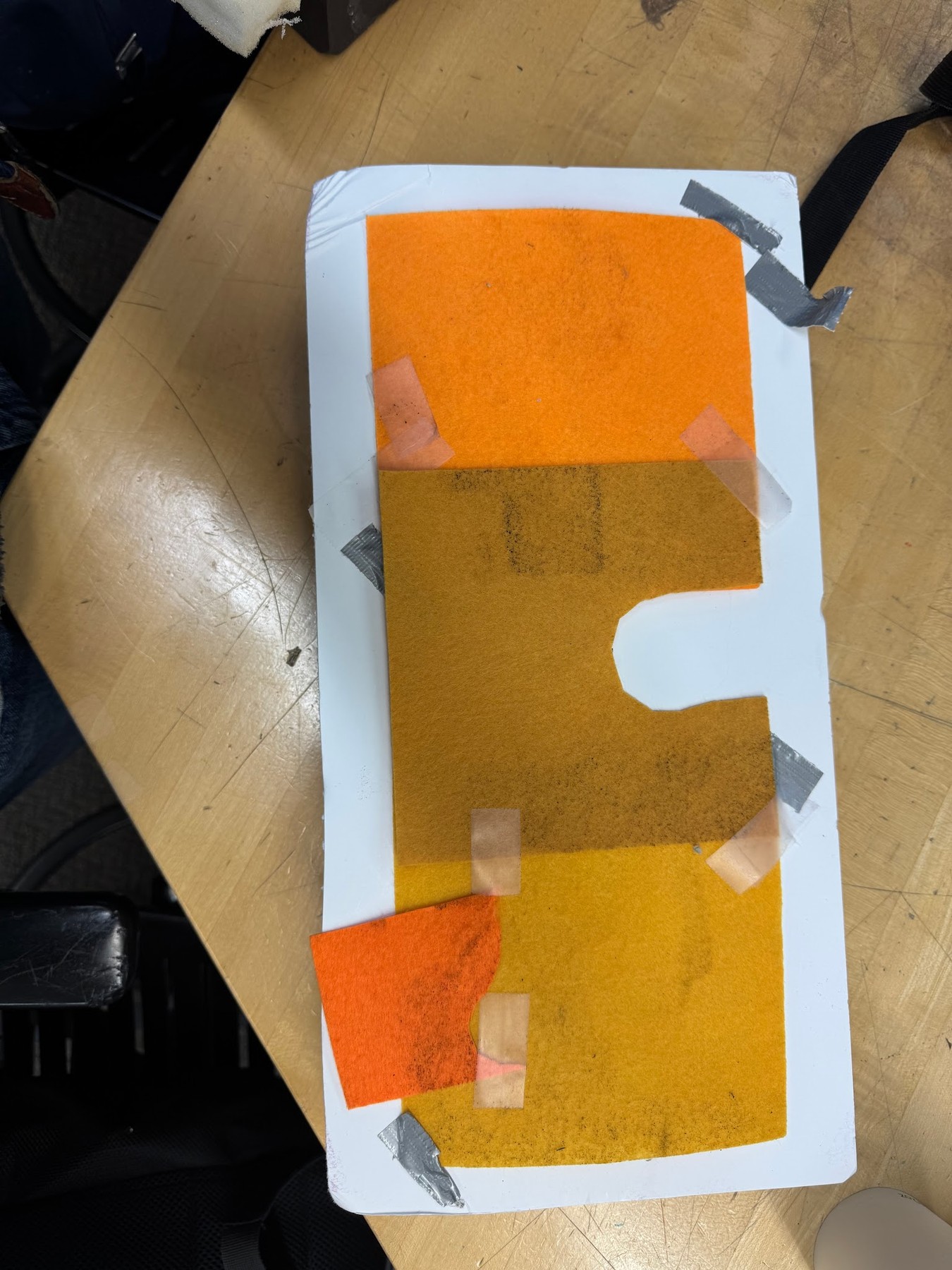
During Weeks 5–7, I helped build and test Swiffer-style, gravity-assisted, reservoir-pad, and dispensing mockups to expose specific failure modes.
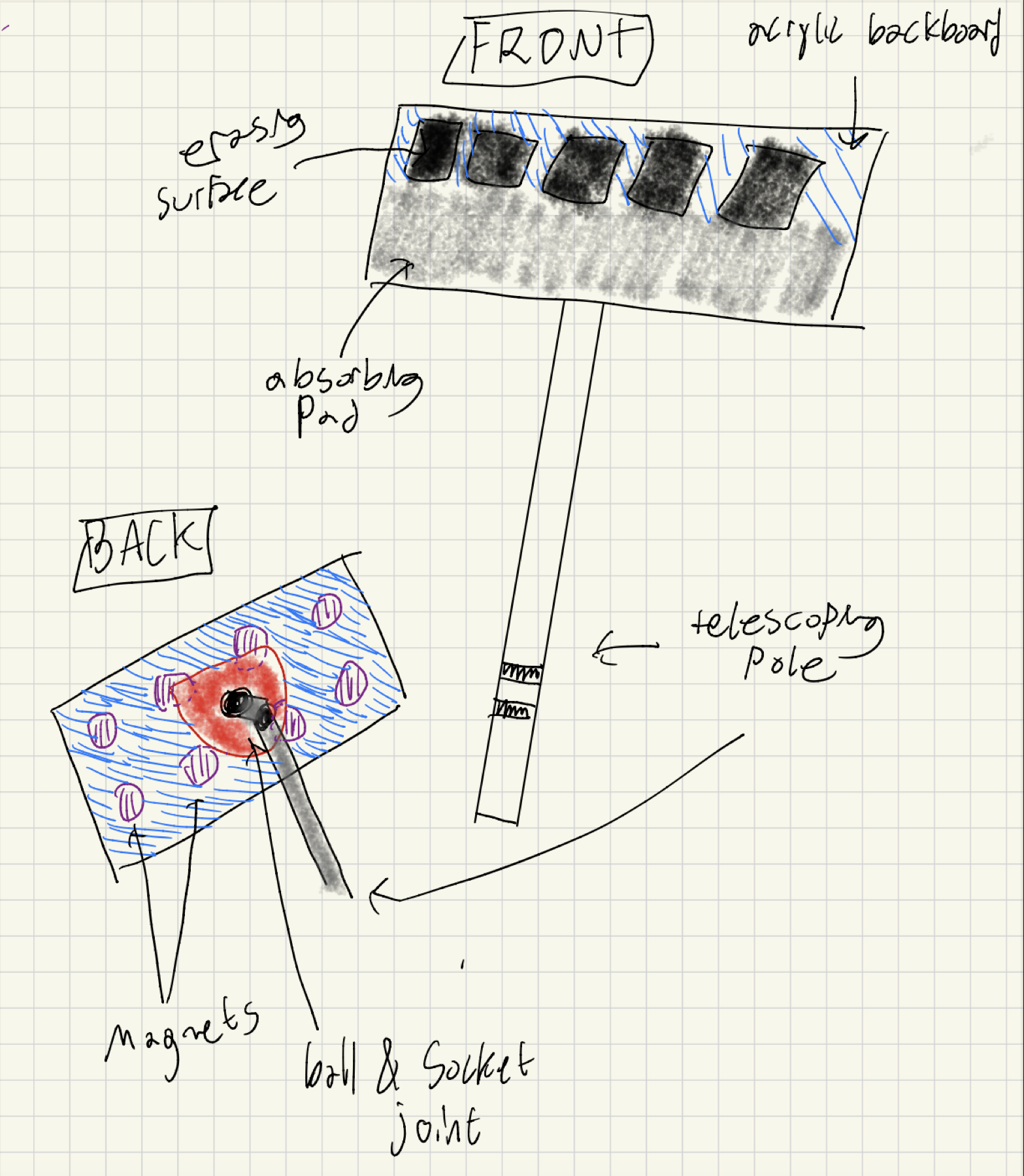
During Weeks 8–9, I translated the strongest features into the design-freeze sketch and helped fabricate the final MagClean prototype.
During Week 10, I helped run the full-scale timed test and turn our observations into the final report.
Outcomes
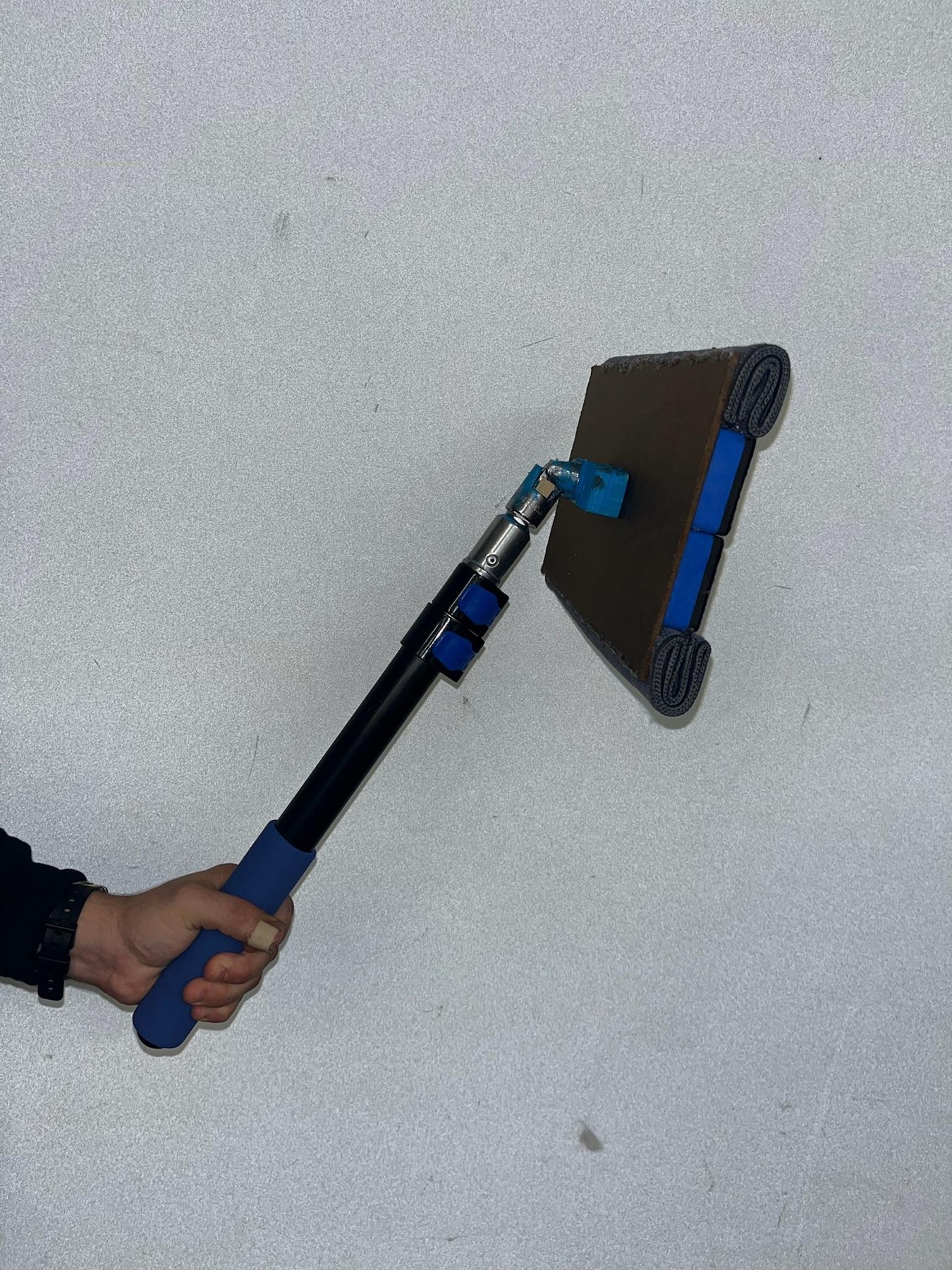
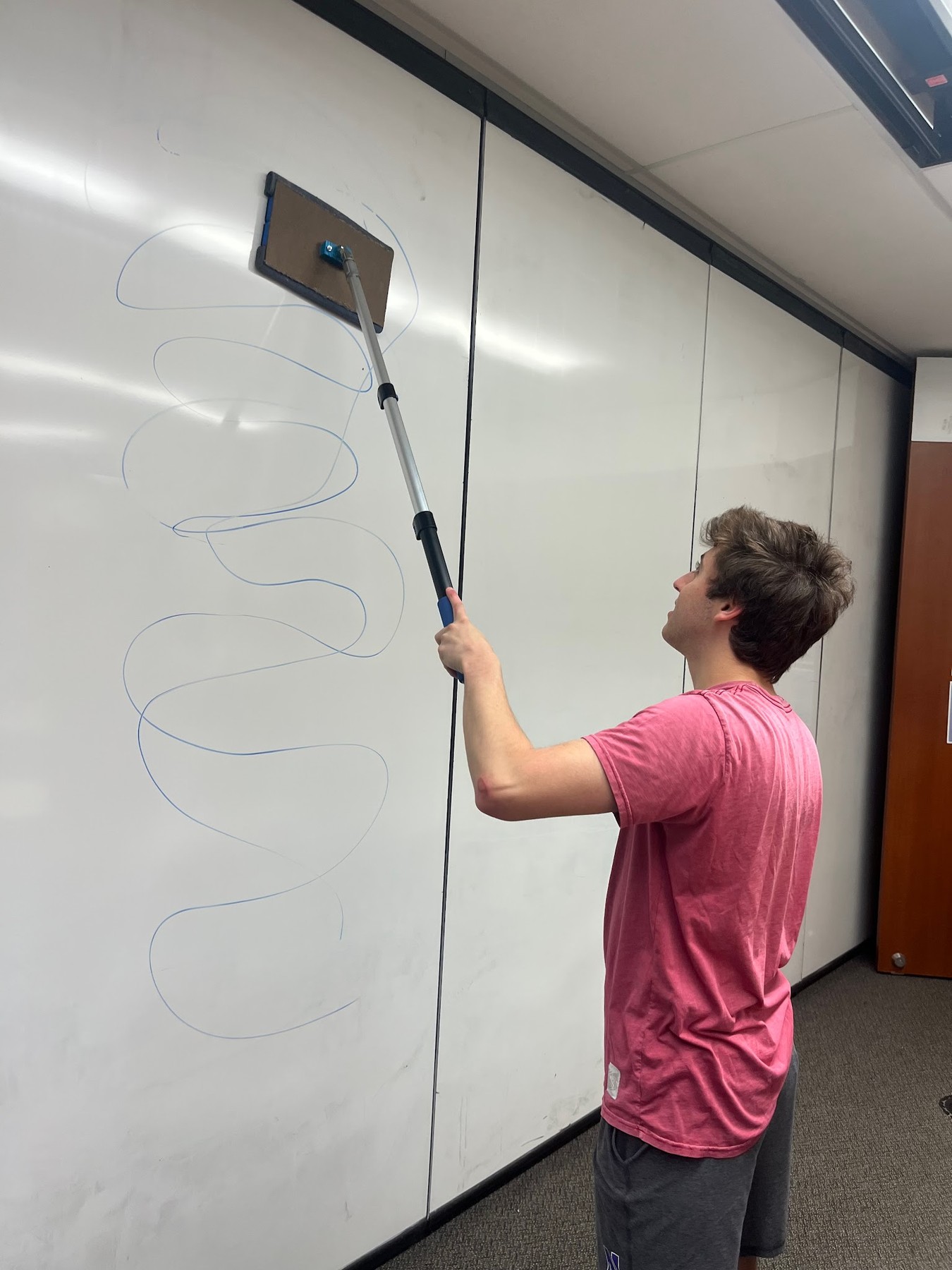
During our timed test on a 4,725 square-inch board section, we cleaned the panel with MagClean in 48 to 52 seconds; the same task took 98 to 105 seconds with a standard eraser. Our 84 square-inch cleaning head covered seven times more area per stroke, reached the top of the board without a stool, and kept the final prototype cost to $40.51.
- Our timed test measured 48–52 seconds with MagClean versus 98–105 seconds with a standard eraser on the same 4,725 in² panel.
- Achieved seven times more coverage per stroke with an 84 in² head while keeping the final prototype cost to $40.51.
I learned that the best design decisions came from isolating the risky functions before combining them. By testing reach, contact pressure, head motion, and wet cleaning separately, I could see why each early concept failed and which features deserved to carry forward. In a future version, I would reduce the five-pound mass, move more weight toward the user, and make the cleaning pads faster to replace, clean, and store.