MagClean 2.0
Overview
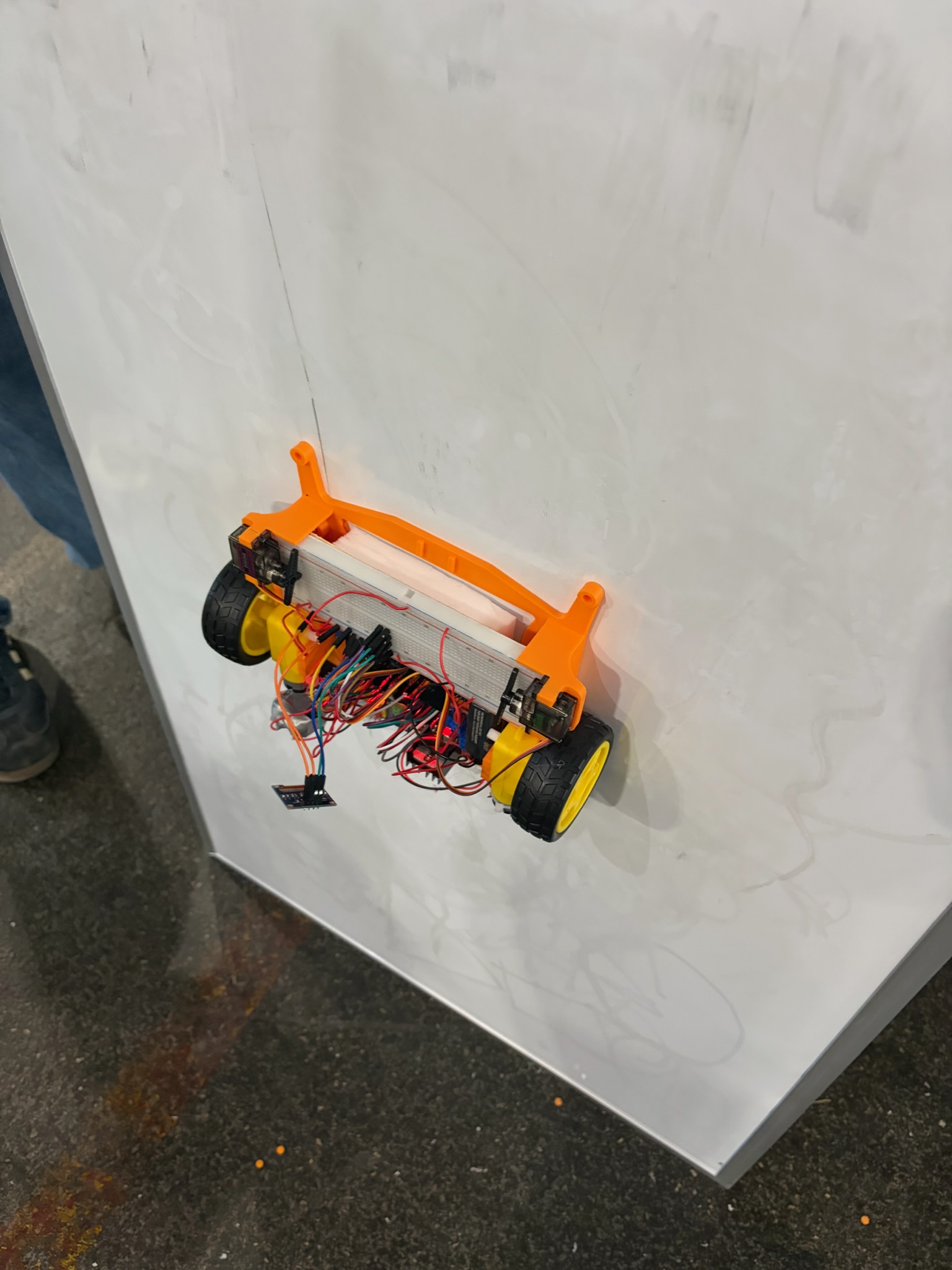
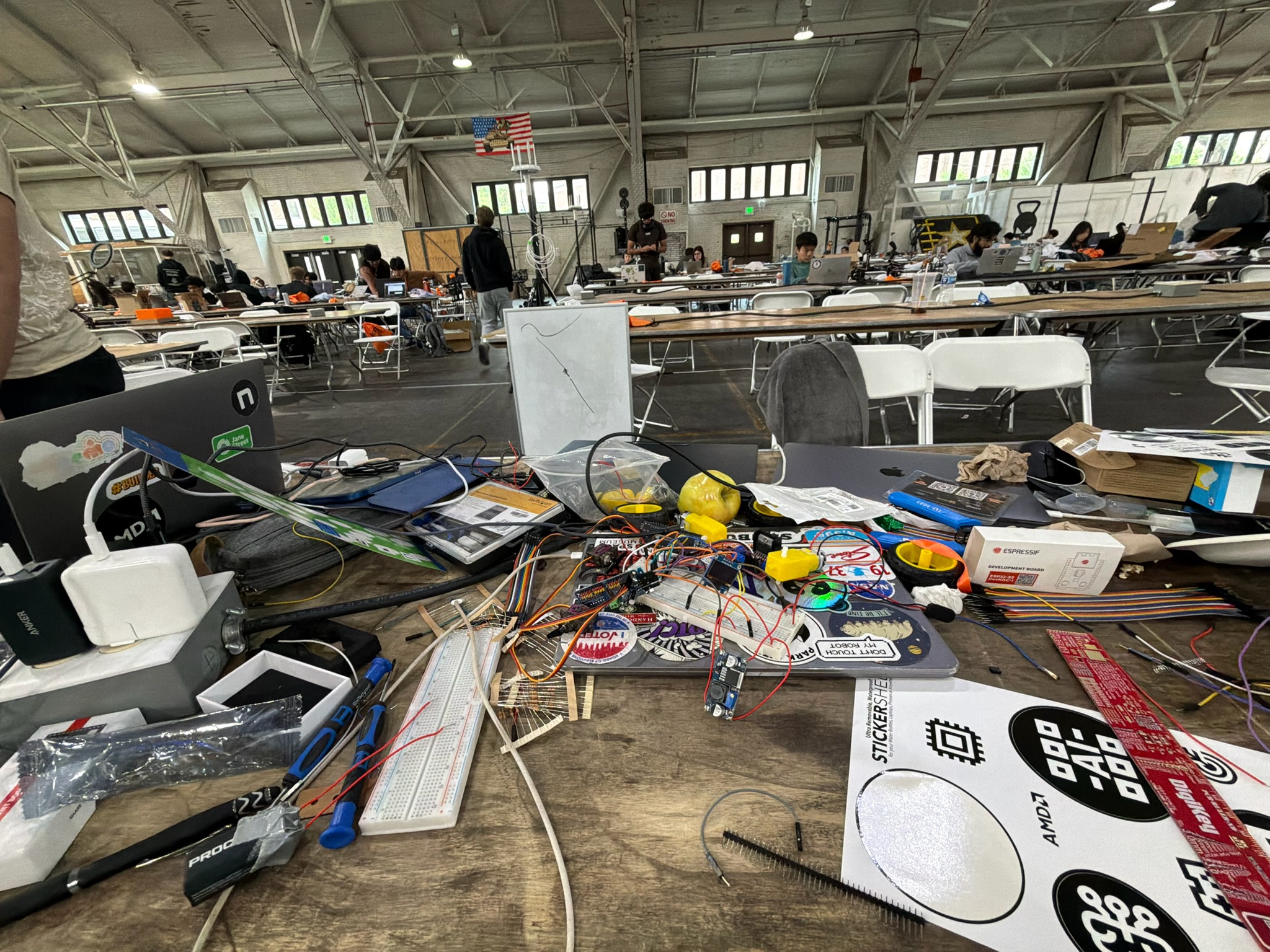
During StarkHacks 2026, my team and I turned the original MagClean idea into a robot that could adhere to a vertical magnetic whiteboard, drive across it, and deploy erasers on command. Because we were working on a hackathon timeline, we had to solve adhesion, traction, packaging, actuation, embedded control, and computer vision in parallel. I concentrated on the mechanical system and worked closely with the electrical and software members whenever a housing or wheel decision affected their hardware.
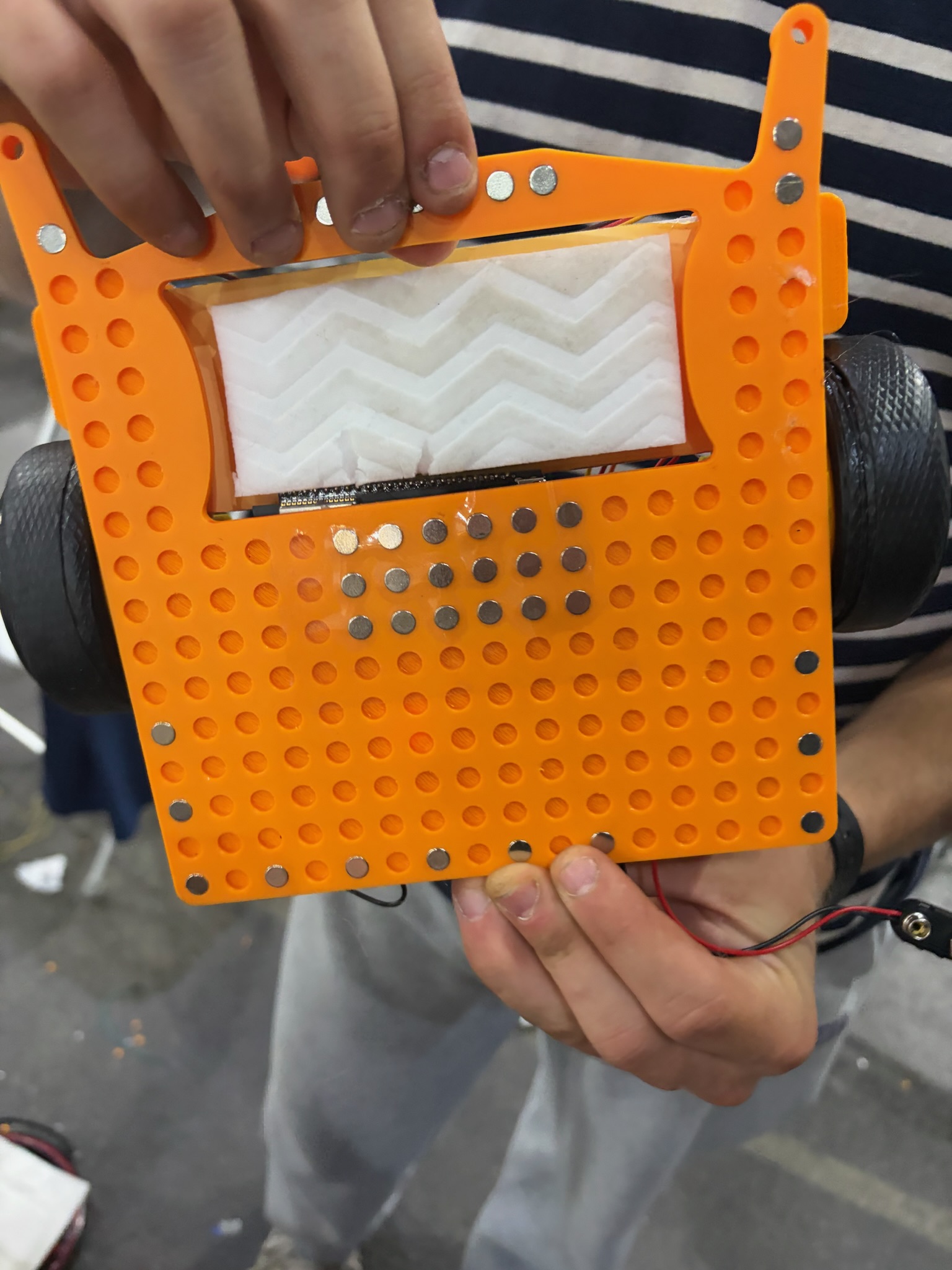
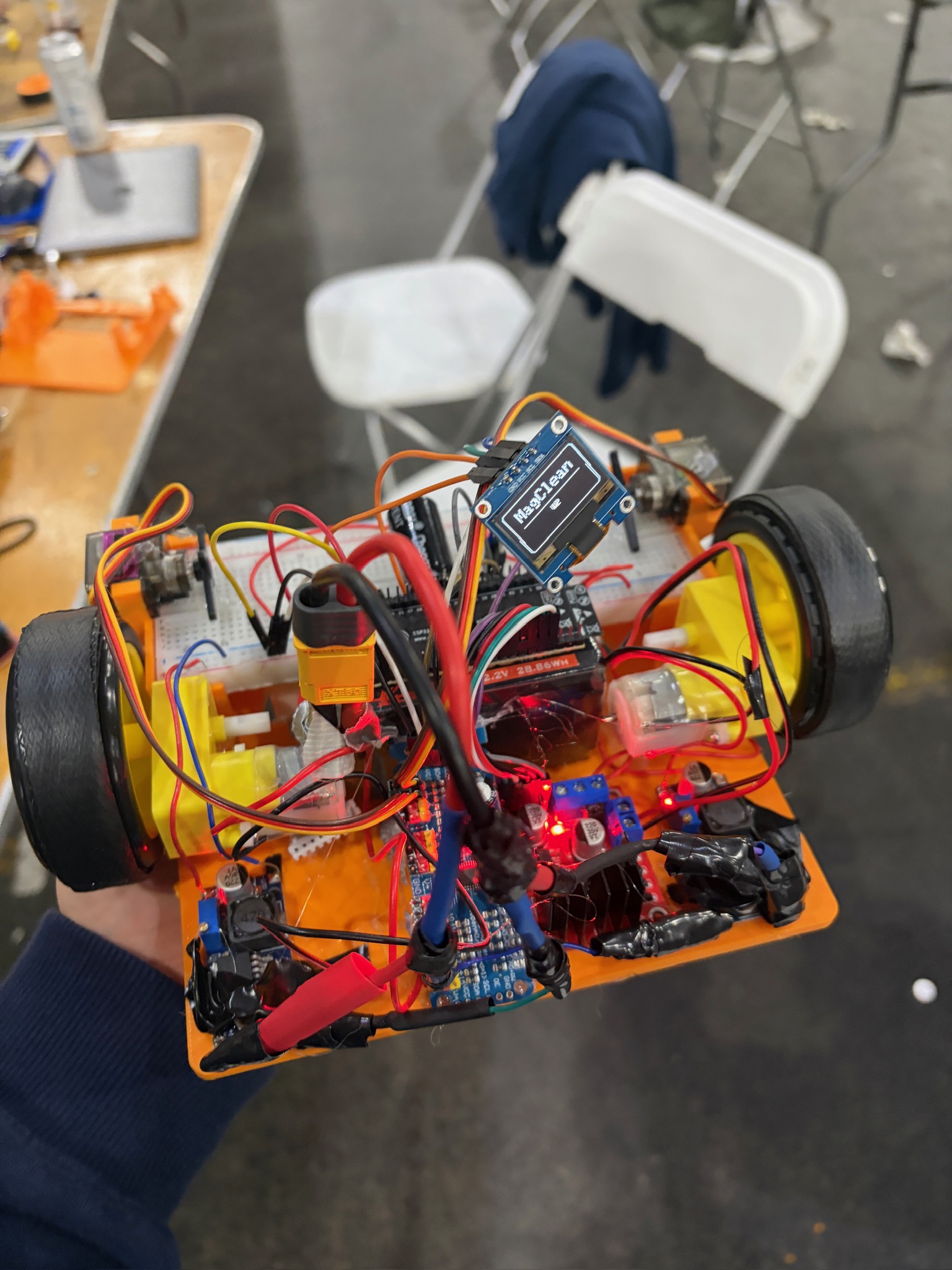
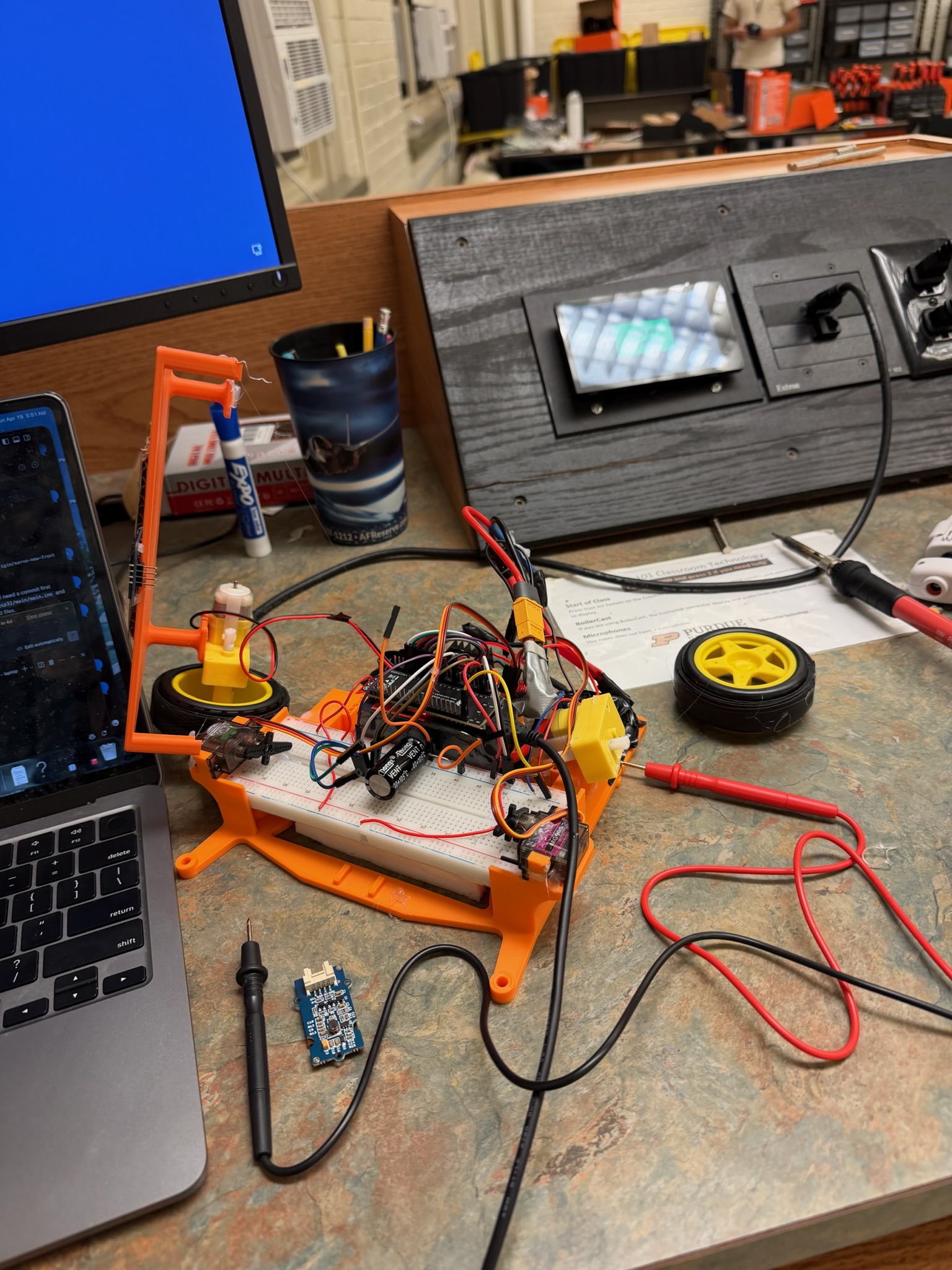
I designed and integrated the physical robot: the 3D-printed electronics housing, wheel mounts, eraser arrangement, and supporting mechanical components. I iterated those parts around adhesion, traction, packaging, and surface contact during the hackathon build.
Skills: Mechanical Design · Robotics · 3D Printing
Goals
My team and I set out to build a robot that could adhere to a vertical magnetic whiteboard, drive to selected areas, and deploy its erasers on command within one hackathon.
- Maintain magnetic adhesion without overwhelming the drive motors.
- Enough wheel traction and torque for vertical motion.
- Package the electronics in a housing that we could print and assemble quickly.
- Mount and actuate the erasers reliably.
- Integrate the complete physical system within the hackathon timeline.
Design
Defined the electronics volume and wheel interfaces before laying out the housing.
Prototyped the PLA housing and cover, then adjusted the geometry around the real components.
Integrated the wheels, motors, magnets, and eraser hardware into one physical assembly.
Iterated on traction, component fit, fastener access, and print tolerances as failures appeared.
Supported final assembly and testing while coordinating mechanical changes with the controls and vision work.
Outcomes
We completed a working four-wheel prototype with a printed PLA housing, magnetic adhesion, servo-actuated erasers, ESP32 control, and a laptop-based vision and planning interface. I designed and iterated the electronics housing, integrated the wheels and motors, arranged the eraser components, and supported final assembly and testing. The finished prototype demonstrated the full mechanical and control concept within the hackathon.
- Learned that successful vertical locomotion depends on balancing magnetic force, wheel traction, rolling resistance, and available motor torque.
- Rapid physical testing exposed packaging, tolerance, and component-integration problems early enough for me to iterate during the event.
I learned to treat vertical motion as a force-balance problem. Increasing magnetic attraction made the robot safer against detachment, but it also increased the normal force, rolling resistance, and torque required from the drive system. Rapid fit checks and short print iterations helped me correct packaging and tolerance problems before final assembly. In a next version, I would measure wheel slip, magnetic loading, available motor torque, and eraser contact force before finalizing the housing.