Unicycle Concept
Overview
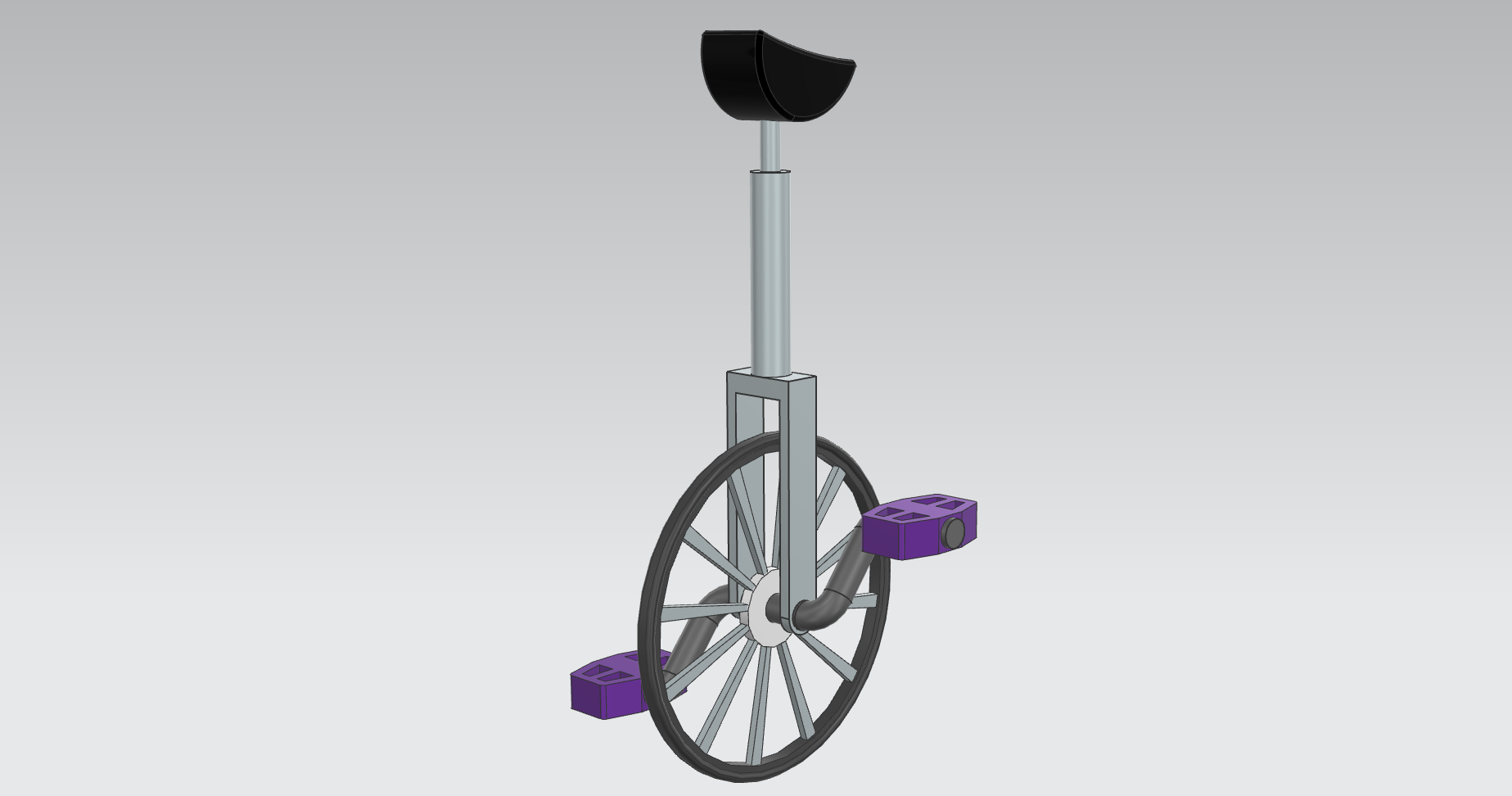
I began with a supplied frame and axle that defined the fixed interfaces, then designed the rider-facing components around them. I used the wheel, seat, and pedals to give the concept its own visual identity while checking practical geometry, interference, assembly order, and the degrees of freedom the final mechanism needed to retain.
Skills: Siemens NX · Part Modeling · Assembly Constraints
Goals
I set out to create a practical, visually distinctive unicycle concept while preserving the fit and functional motion of the complete assembly.
- Avoid interference and unintended assembly gaps.
- Practical geometry for each rider-facing component.
- Each custom part to remain a fully defined single solid body.
- Preserve realistic degrees of freedom in the final assembly.
Design
Measured the supplied interfaces and defined the envelope available to each custom component.
Modeled the wheel, seat, and pedals as fully defined single-body parts.
Constrained the six-part assembly while preserving the rotation required for the wheel and pedals.
Reviewed the finished model for fit, interference, believable proportions, and presentation quality.
Outcomes
I completed a six-file Siemens NX assembly that combined my custom wheel, seat, and pedals with the supplied frame and axle. I modeled each original component as a fully defined single solid body, constrained the parts without overconstraining the mechanism, and reviewed the final assembly for visible gaps and interference.
- Learned to use assembly constraints to preserve the motion the product requires.
- Used consistent geometry and visual treatment to make the separate parts read as one coherent concept.
I learned that an assembly constraint scheme should describe how a mechanism actually works, not simply remove every available degree of freedom. I also saw how consistent proportions, repeated geometry, and a deliberate visual treatment can make separate classroom CAD parts read as one coherent product.