NAR Level 1 Rocket
Overview
I treated the certification build as one integrated engineering problem rather than a kit assembly. I used OpenRocket to evaluate stability, launch-rail velocity, motor performance, apogee, and recovery timing. I then used assembly CAD to check how the 29 mm motor mount, fiberglass airframe, fins, electronics, and recovery hardware fit together before committing to the physical build.
Skills: OpenRocket · CAD · Fabrication
Goals
I set out to design and build a stable, recoverable high-power rocket that could safely complete an NAR Level 1 certification flight on an H-class motor.
- Maintain a stable flight margin on an H-class motor.
- The rocket to clear the launch guide at a safe velocity.
- Deploy the 24 in parachute near apogee and recover the vehicle without damage.
- Complete a successful flight witnessed for NAR Level 1 certification.
Design
Modeled the vehicle and H182R-10.5 flight in OpenRocket to check stability, launch velocity, altitude, speed, and recovery timing.
Built the assembly CAD around the motor mount, airframe, fins, and recovery volume before fabrication.
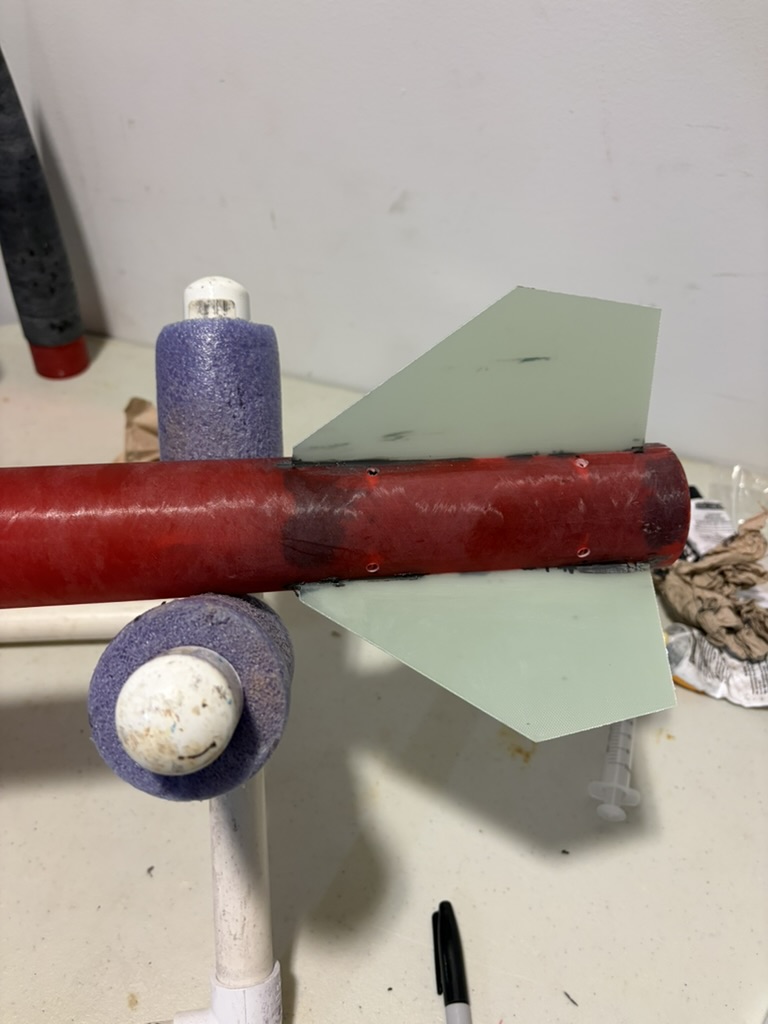
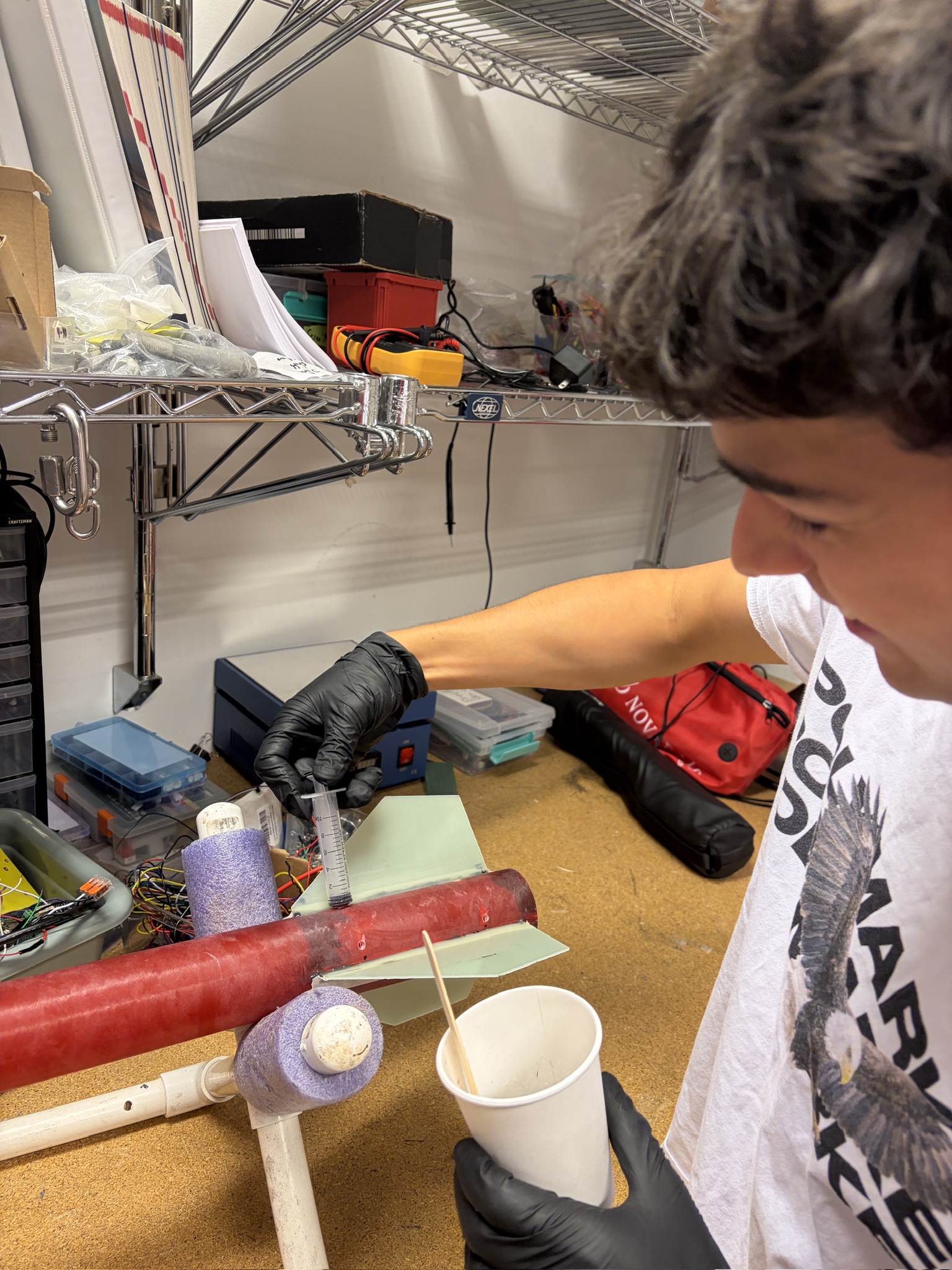
Aligned and bonded the fins, reinforced the fiberglass airframe, and integrated the motor and recovery hardware.
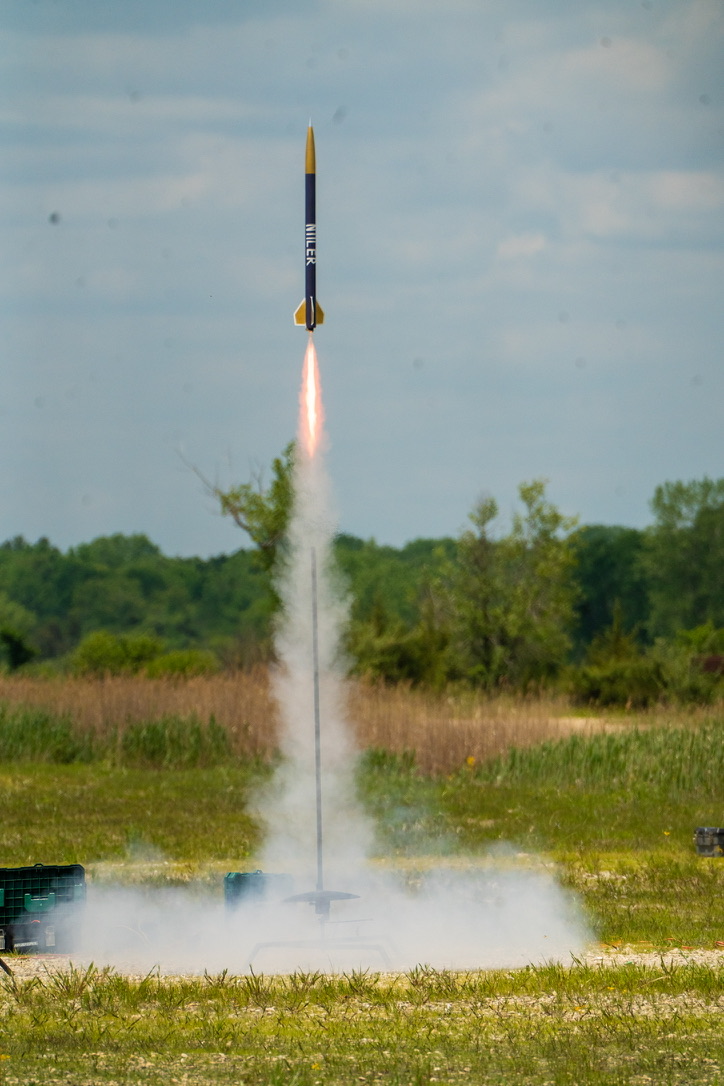
Completed the preflight checks, launched the rocket, and inspected the recovered vehicle for certification.
Outcomes
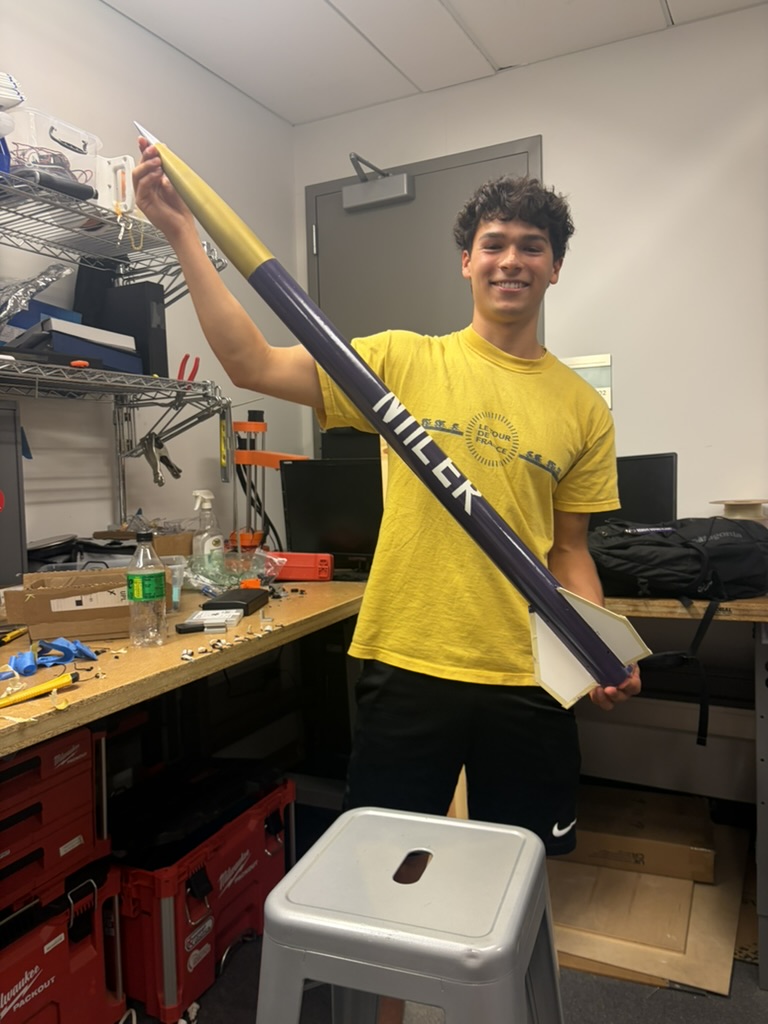
My H182R-10.5 simulation predicted a 2,487-foot apogee, a 355 mph maximum speed, and a 105-second total flight. I completed the fiberglass build, verified the recovery system, launched the rocket, and recovered it successfully under its 24-inch parachute. That flight earned my NAR Level 1 certification.
- H182R-10.5 simulation predicted a 2,487 ft apogee, 355 mph maximum velocity, and 105 s total flight time.
- Verified the complete simulation-to-fabrication workflow through a successful launch, parachute deployment, recovery, and Level 1 certification.
I learned that a successful certification flight depends just as much on assembly quality and recovery preparation as it does on simulated aerodynamic performance. Fin alignment, structural bonding, motor retention, shock-cord routing, and parachute packing all had to work together. For a future flight, I would add onboard logging and compare the measured trajectory against my OpenRocket model to refine the drag and mass assumptions.